
Understanding how to choose abrasive belt specifications helps industrial buyers select products that match their materials, equipment, and finishing requirements. The right choice depends on abrasive grain, grit, backing flexibility, and belt dimensions.
This guide covers the key buying considerations and compares two 3M Trizact abrasive belts available at ISQ Holdings.
5 Things to Check Before Buying an Abrasive Belt
An abrasive belt is a continuous loop of abrasive material used with belt sanding or grinding machines. Different belt specifications affect material removal, surface finish, and machine compatibility.
1. Match the Abrasive Grain to the Material
Abrasive grain determines the belt’s cutting characteristics and suitability for different applications.
| Abrasive Grain | Best Suited For |
|---|---|
| Aluminium oxide | General metal sanding and finishing |
| Silicon carbide | Fine finishing and selected non-ferrous materials |
| Ceramic alumina | Heavy-duty grinding and stock removal |
| Zirconia alumina | Demanding metal grinding applications |
2. Choose the Appropriate Grit
Coarse grits remove material faster, while finer grits produce smoother finishes.
| Grit Range | Typical Application |
|---|---|
| 24–60 | Heavy material removal |
| 80–120 | General sanding and blending |
| 150–240 | Fine surface preparation |
| 320+ | Fine finishing and polishing preparation |
These ranges are general guidelines. Some engineered abrasives, including 3M Trizact, use different grade systems.
3. Check the Backing Flexibility
Flexible backing conforms more easily to curved or contoured components. Heavier cloth backing offers greater support for applications requiring stability.
Choose based on the workpiece shape, contact pressure, and machine requirements.
4. Confirm Belt Dimensions
Check the belt width and length against the machine specifications. Also verify operating speed and compatibility before ordering.
5. Identify the Required Finish
Determine whether the process involves aggressive grinding, blending, or fine finishing. Some operations require multiple abrasive grades rather than a single belt.
3M Trizact 407EA vs 237AA
ISQ Holdings lists two 3M Trizact cloth belts. Both use structured abrasive technology designed to deliver consistent finishing results, but they differ in construction.
| Feature | 3M Trizact 407EA | 3M Trizact 237AA |
|---|---|---|
| Abrasive mineral | Silicon carbide | Aluminium oxide |
| Backing | Flexible JE-weight cloth | Semi-flexible X-weight cloth |
| Main strength | Surface conformity | Backing support |
| Suitable applications | Fine finishing on contoured surfaces | Consistent industrial surface finishing |
| Selection priority | Flexibility | Stability |
3M Trizact Cloth Belt 407EA
The 3M Trizact 407EA features silicon carbide abrasive and flexible backing. Consider this model when finishing contoured components or surfaces that require greater belt conformity.
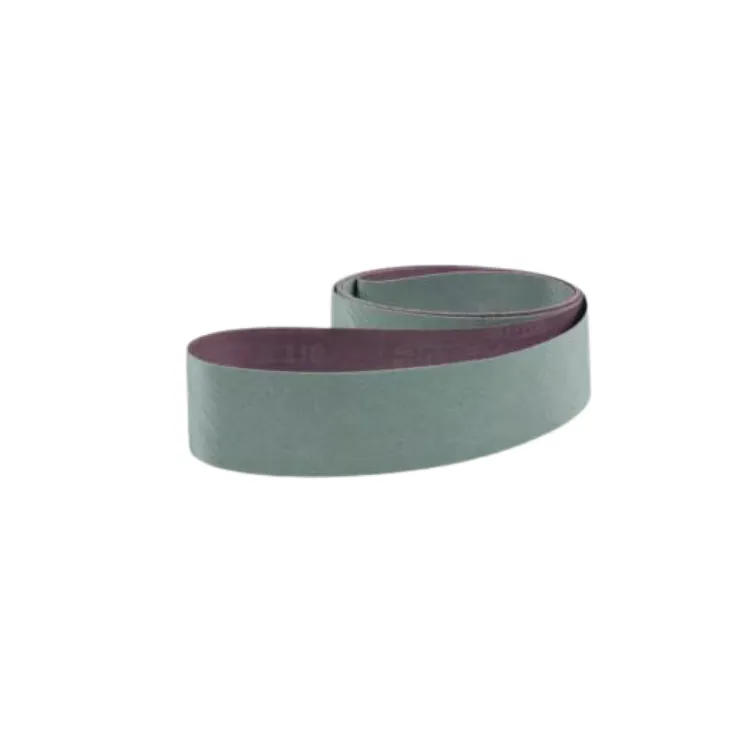
FEATURED PRODUCT
3M™ Trizact™ Cloth Belt 407EA
Flexible abrasive belt with micro-replicated structures and an integrated grinding aid, designed for consistent fine finishing on curved surfaces and stainless steel.
3M Trizact Cloth Belt 237AA
The 3M Trizact 237AA combines aluminium oxide abrasive with semi-flexible cloth backing. It is an option for industrial finishing processes that benefit from consistent abrasive action and additional backing support.
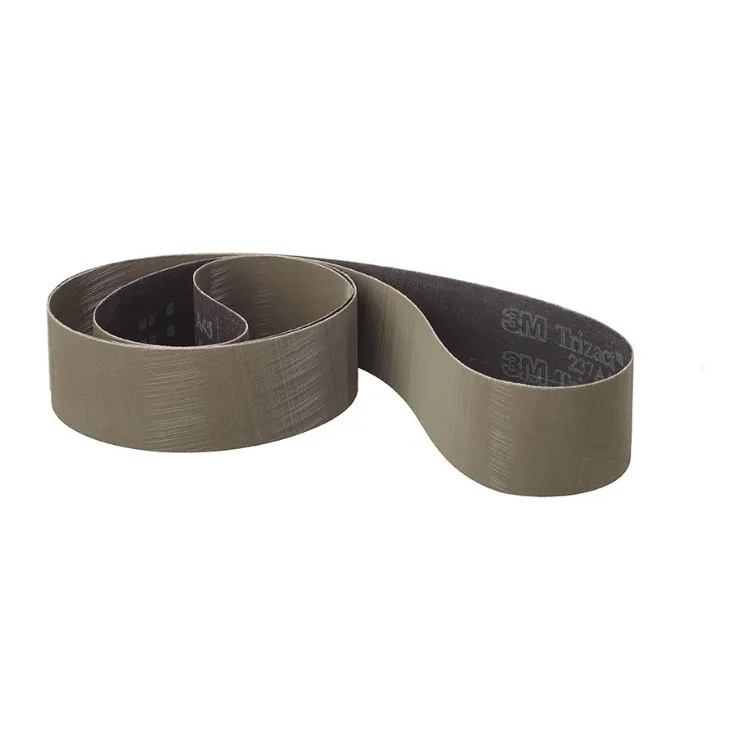
FEATURED PRODUCT
3M™ Trizact™ Cloth Belt 237AA
Long-lasting abrasive belt featuring micro-replicated pyramids and self-sharpening action for consistent, high-lustre finishing on stainless steel, carbon steel, and nickel alloys.
Which should you choose? Prioritise 407EA when flexibility is important, or consider 237AA when a more substantial backing is preferred. Confirm the available grades and dimensions before purchasing.
Find the Right Abrasive Belt at ISQ Holdings
Knowing how to choose abrasive belt specifications helps buyers match abrasive products to their industrial applications. Consider material compatibility, grit, backing, and machine dimensions before making a purchase.
ISQ Holdings supplies 3M Trizact Cloth Belt 407EA and 3M Trizact Cloth Belt 237AA for industrial finishing requirements.
Contact ISQ Holdings to enquire about product availability and suitable specifications.
Frequently Asked Questions
1. What is the best abrasive belt for metal?
It depends on the metal type and application. Aluminium oxide is commonly used for general metal finishing, while ceramic abrasives are often selected for heavier grinding.
2. Is higher grit better for abrasive belts?
Not always. Higher grit numbers generally produce finer finishes, while lower grit numbers are better for heavier material removal.
3. Can abrasive belts be used on stainless steel?
Yes, provided the selected belt is compatible with stainless steel and the intended finishing process.
4. What is the difference between 3M Trizact and conventional abrasive belts?
Trizact uses engineered abrasive structures designed for consistent finishing, while conventional coated abrasives typically use a more randomly distributed abrasive grain coating.
5. Does ISQ Holdings supply 3M abrasive belts?
Yes. ISQ Holdings lists 3M Trizact Cloth Belt 407EA and 237AA. Contact ISQ to confirm available specifications.