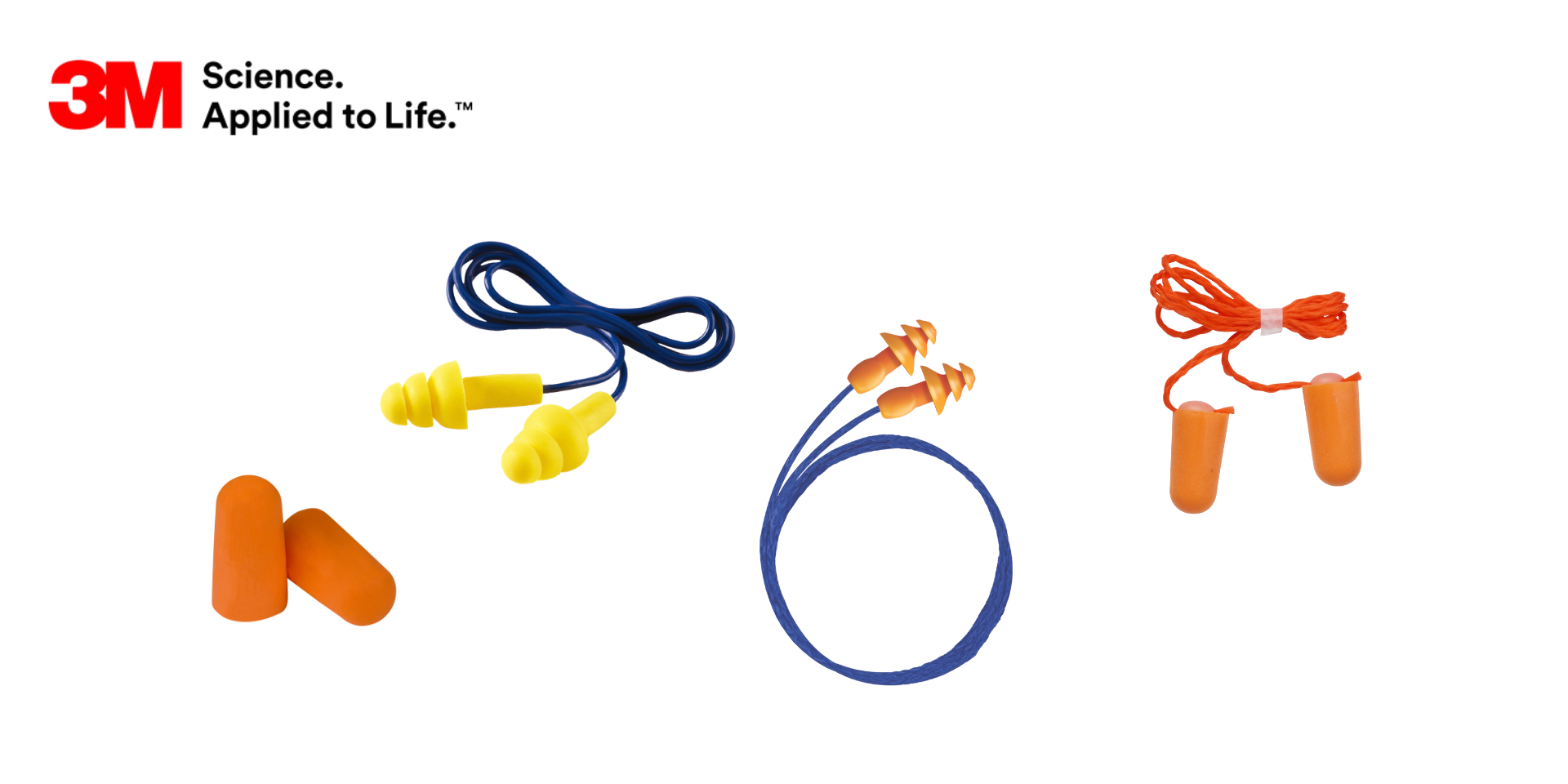
Choosing the right 3M earplug can help reduce workers’ exposure to excessive workplace noise. The best option depends on the noise environment, required hearing protection, earplug design, fit, and how long it will be worn.
For industrial and workplace applications, 3M offers different hearing protection solutions, including foam, reusable, and corded earplugs. Understanding these options can help businesses select hearing protection that suits their specific work environment.
What to Consider When Choosing 3M Earplugs
Several factors can affect which 3M earplugs are suitable for a workplace. Considering these factors before selecting a product can help support proper hearing protection practices.
1. Workplace Noise
The type and level of noise should be considered first. Machinery, power tools, production equipment, and vehicles can all contribute to workplace noise exposure.
A workplace noise assessment can help determine the level of hearing protection required.
2. Earplug Design
Different earplug designs offer different practical features.
| Earplug type | Typical characteristics |
| Foam earplugs | Lightweight and commonly disposable |
| Reusable earplugs | Designed for repeated use with proper care |
| Corded earplugs | Easier to handle when temporarily removed |
The appropriate design depends on the application, user preference, and workplace requirements.
3. Fit and Comfort
An earplug needs to fit correctly to provide its intended protection. Comfort is also important because workers may need to wear hearing protection throughout a shift.
Poor fitting or inconsistent use can reduce the effectiveness of hearing protection.
Which Type of 3M Earplug Should You Use?
Different 3M hearing protection earplugs are designed for different workplace requirements. The right choice depends on the application, noise exposure, and how the product will be used.
1. Foam Earplugs
Foam earplugs are compressed before insertion and expand inside the ear canal. They are commonly used when workers need lightweight, disposable hearing protection.
They can be suitable for manufacturing, construction, workshops, and other noisy work environments when the product’s specifications match the application.
2. Reusable Earplugs
Reusable earplugs are designed for repeated use when properly cleaned and maintained.
They can be a practical option for workers who regularly require hearing protection and prefer a reusable solution.
3. Corded Earplugs
Corded earplugs connect the two earplugs with a cord, making them easier to handle when removed temporarily.
This can be useful for workers who move between noisy and quieter work areas during their tasks.
How to Choose the Right Hearing Protection for Workplace Noise
Selecting 3M ear protection should be based on the actual workplace conditions rather than simply choosing the highest-rated option.
Consider:
- Noise exposure — Identify the main noise sources and exposure levels.
- Required protection — Check the product’s specifications and workplace requirements.
- Fit — Make sure the earplug can be fitted correctly.
- Comfort — Consider how long workers will wear it.
- Application — Match the design to the work environment.
- Other PPE — Make sure it can be used alongside required protective equipment.
For particularly high noise exposure, a combination of earplugs and earmuffs may be considered when appropriate under the workplace’s hearing conservation procedures.
How to Wear 3M Earplugs Properly
Correct fitting is important when using 3M earplugs for workplace hearing protection. The fitting method can vary depending on the product design.
For foam earplugs, the general process is:
- Clean your hands before handling the earplug.
- Roll or compress the earplug according to the manufacturer’s instructions.
- Insert the earplug carefully into the ear canal.
- Hold it in position while the foam expands.
- Check the fit before entering the noisy work area.
Always follow the fitting instructions supplied with the specific earplug.
Where Are 3M Earplugs Commonly Used?
3M ear plugs for work can be used across different industries where workers may be exposed to excessive noise.
Common applications include:
- Manufacturing and production
- Construction
- Automotive workshops
- Industrial maintenance
- Machinery operations
- Metalworking
- Power tool applications
The appropriate hearing protection should be selected based on the noise exposure and workplace risk assessment.
Hearing Protection Products from ISQ
ISQ provides workplace safety and industrial products for different applications, including hearing protection solutions from 3M.
Depending on the workplace requirements, hearing protection options can include:
- Foam earplugs — for disposable workplace hearing protection.
- Reusable earplugs — for applications requiring repeated use.
- Corded earplugs — for easier handling during work.
- Earmuffs — for applications where over-the-ear hearing protection is preferred.
Choosing the right 3M earplug starts with understanding the noise exposure, work environment, and required level of protection.
Looking for hearing protection for your workplace? Explore ISQ’s range of 3M safety products and find an option suited to your application.
FAQ
1. Are 3M earplugs suitable for workplace use?
Yes. 3M offers hearing protection products designed for occupational and industrial applications. The appropriate product depends on the workplace noise exposure and application.
2. Do 3M earplugs completely block noise?
No. Earplugs are designed to reduce noise exposure rather than eliminate sound completely. Proper selection and fitting are important for the intended protection.
3. How long can foam earplugs be used?
Foam earplugs are generally designed for disposable use. Replace them when they become dirty, damaged, or no longer fit properly.
4. Can earplugs be used with earmuffs?
Yes. Earplugs and earmuffs can be used together when additional hearing protection is required for a particular noise exposure.
5. How do I know if an earplug fits correctly?
The earplug should be inserted according to the manufacturer’s instructions and remain securely positioned. An incorrect fit can reduce the protection provided by the hearing protector.