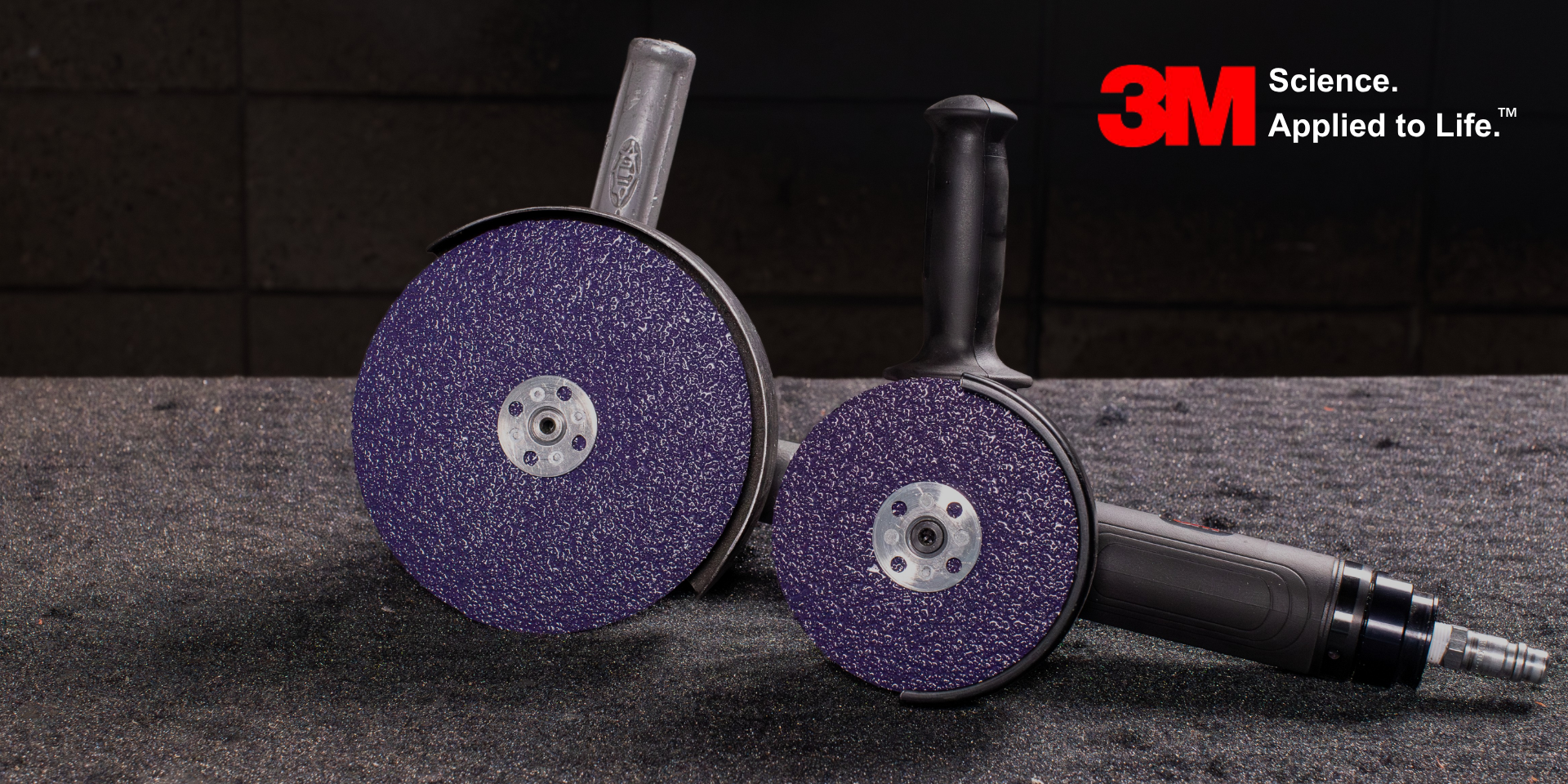
Choosing the right fibre disc can make a difference when working with metal, particularly for grinding, weld removal, deburring, and surface preparation.
Different applications require different abrasive specifications, so understanding the disc, the surfaces it can handle, and how to select the right option is important for achieving the intended result.
What Is a Fibre Disc?
A fibre disc is a coated abrasive disc consisting of an abrasive layer bonded to a strong fibre backing. The abrasive grains perform the cutting action, while the backing provides support as the disc rotates against the workpiece.
Unlike some other abrasive discs, a fibre disc is normally used together with a separate backing pad. This combination allows the disc to maintain contact with the metal surface while the angle grinder provides the required rotation.
The main components include:
| Component | Function |
| Abrasive grains | Cut and remove material from the workpiece |
| Resin bond | Holds the abrasive grains in place |
| Fibre backing | Supports the abrasive layer during grinding |
| Centre hole | Allows the disc to be mounted with a compatible backing pad |
The abrasive material and grit determine how aggressively the disc works and what type of surface finish it can produce.
How Does a Fibre Disc Work?
A fibre disc works by using abrasive grains to cut away small amounts of material as the disc rotates against the surface. The combination of rotational speed, abrasive grain, pressure, and movement across the workpiece determines the material removal performance.
The basic process is:
- The disc rotates on a compatible angle grinder.
- Abrasive grains contact the metal surface.
- The grains cut into the surface and remove small amounts of material.
- Continuous disc movement distributes the grinding action across the work area.
- The worn abrasive surface is replaced when the disc no longer provides the required performance.
In simple terms: a fibre disc does not remove metal through the backing material. The abrasive grains on its surface perform the cutting and grinding action.
What Affects Fibre Disc Performance?
Several factors can change how quickly and effectively a fibre disc removes material.
- Grit size: Coarser grits generally provide more aggressive material removal, while finer grits are used when a smoother finish is required.
- Abrasive type: Different abrasive materials are suited to different metals and applications.
- Pressure: Excessive pressure can increase heat and accelerate disc wear.
- Working angle: The angle between the disc and workpiece affects the contact area and grinding action.
- Machine speed: The grinder must operate within the disc’s specified speed rating.
- Surface condition: Welds, rust, coatings, and uneven surfaces can require different approaches.
Using more pressure does not necessarily mean faster grinding. Controlled pressure and the correct disc specification can help maintain consistent abrasive performance.
What Surfaces Can a Fibre Disc Handle?
A fibre disc for metal surfaces can be used on various metal workpieces, but the appropriate abrasive specification depends on the material and application.
| Metal Surface | Common Applications |
| Carbon steel | Grinding, deburring, and material removal |
| Stainless steel | Grinding, weld blending, and surface preparation |
| Aluminium | Surface preparation and selected grinding applications |
| Cast iron | Material removal and edge work |
| Welded surfaces | Weld removal and blending |
The same fibre disc should not automatically be used for every metal. Stainless steel and aluminium, for example, can have different abrasive requirements from carbon steel.
Fibre Disc Applications
Common fibre disc applications include:
- Weld removal
- Deburring sharp edges
- Removing surface imperfections
- Grinding excess material
- Preparing surfaces before further processing
- Blending welded areas
- Removing selected coatings or residues
For heavier grinding work, the required grit and abrasive type should be selected according to the material removal requirement rather than choosing a disc based only on diameter.
Choosing the Right Fibre Disc for Your Application
Selecting the right fibre disc starts with identifying the material, application, and required finish. The following factors can help narrow down the appropriate abrasive specification.
1. Identify the metal
Start with the workpiece material, such as carbon steel, stainless steel, aluminium, or cast iron. Abrasive selection should match the characteristics of the material being processed.
2. Define the application
Determine whether the main objective is heavy material removal, weld removal, deburring, blending, or surface preparation.
A disc used for aggressive grinding may require a different specification from one intended for lighter surface finishing.
3. Select the grit
Fibre disc grit affects the balance between material removal and surface finish.
| Grit Selection | Typical Purpose |
| Coarse | Heavy material removal |
| Medium | General grinding and surface preparation |
| Fine | Blending and smoother finishing |
The appropriate grit depends on how much material needs to be removed and the finish required after grinding.
4. Check machine compatibility
Most fibre discs are used with an angle grinder and compatible backing pad. Before use, check the disc diameter, mounting configuration, and maximum RPM against the specifications of the machine.
Never exceed the maximum operating speed specified for the disc.
5. Consider the required finish
If the next manufacturing step requires a relatively smooth surface, an overly coarse disc may create unnecessary surface marks. Match the fibre disc specification to the finish required by the subsequent process.
Need a Fibre Disc for Metalworking?
Looking for a fibre disc for grinding and material removal? ISQ offers the 3M™ Cubitron™ 3 Fibre Disc, designed for demanding metalworking applications.
Explore the 3M™ Cubitron™ 3 Fibre Disc from ISQ and find the right abrasive solution for your application.
FAQ
1. Can a fibre disc be used on stainless steel?
Yes. A fibre disc can be used on stainless steel when the abrasive specification is suitable for the material. Check the manufacturer’s recommendation before use.
2. Can a fibre disc be used on an angle grinder?
Yes. Fibre discs are commonly used with angle grinders together with a compatible backing pad. Always match the disc size and maximum RPM to the machine.
3. Why does a fibre disc wear out quickly?
Excessive pressure, unsuitable grit, high heat, or demanding materials can accelerate disc wear. Using the correct specification and controlled pressure can help extend disc life.
4. Can a fibre disc be used for finishing?
Yes, finer-grit fibre discs can be used for lighter grinding and surface preparation. However, the required finish may determine whether another abrasive type is more suitable.
5. How should fibre discs be stored?
Store fibre discs in a dry environment away from excessive heat, moisture, and temperature changes. Proper storage helps prevent backing deformation and premature deterioration.